How to Clean Kitchen Chimney Grease at Home in 10 Minutes
Sticky yellow grease on your chimney hood, filters and the wall behind the stove? Here is a step-by-step home method to clean kitchen chimney grease without caustic soda or a service visit.
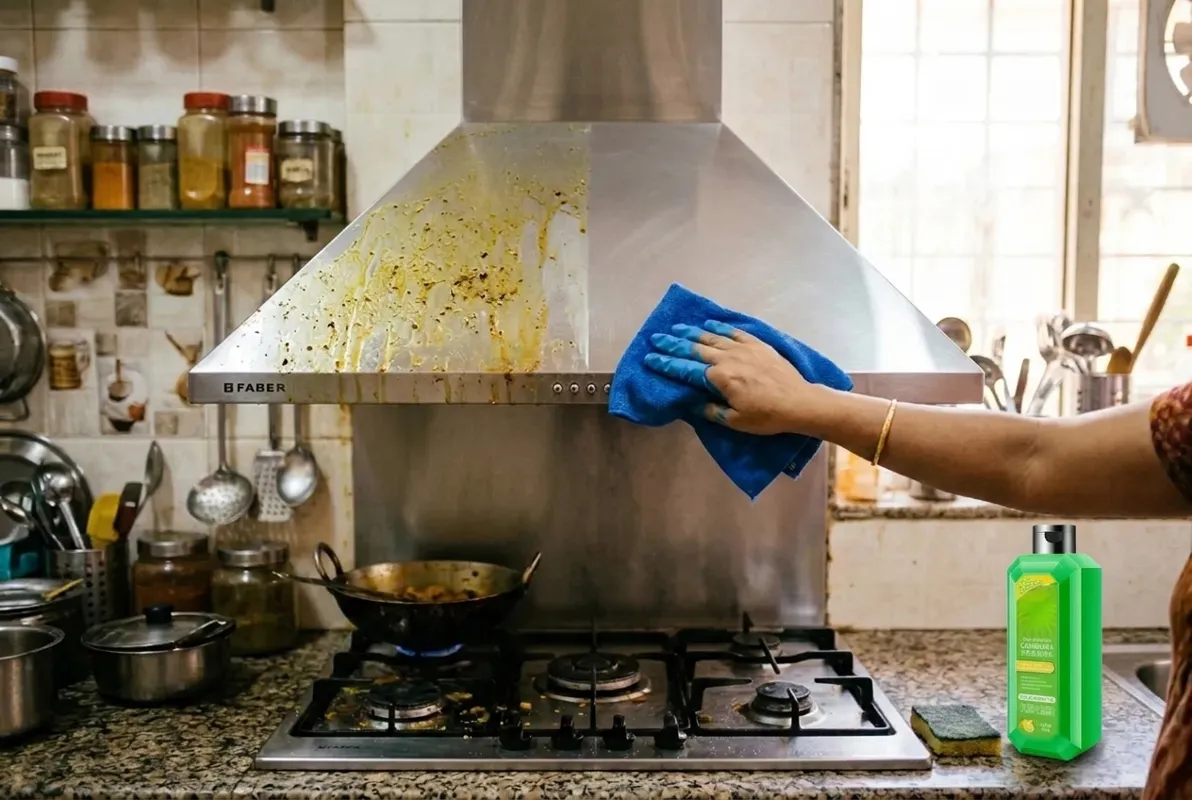
Why Indian kitchens get chimney grease so fast
Indian cooking means tadka, deep frying and high-heat masalas every day. The oil vapour rises, hits the cooler metal of the chimney hood and condenses into a sticky film. Mix that with dust and turmeric, and within a few weeks you have the yellow-brown coating that regular dishwash liquid simply spreads around.
The problem spots:
- The underside of the chimney hood and the light cover
- Baffle or mesh filters (where most of the oil collects)
- The wall tiles and backsplash behind the stove
- The top of the chimney where dust sticks to oil
- Cabinet doors on either side of the hood
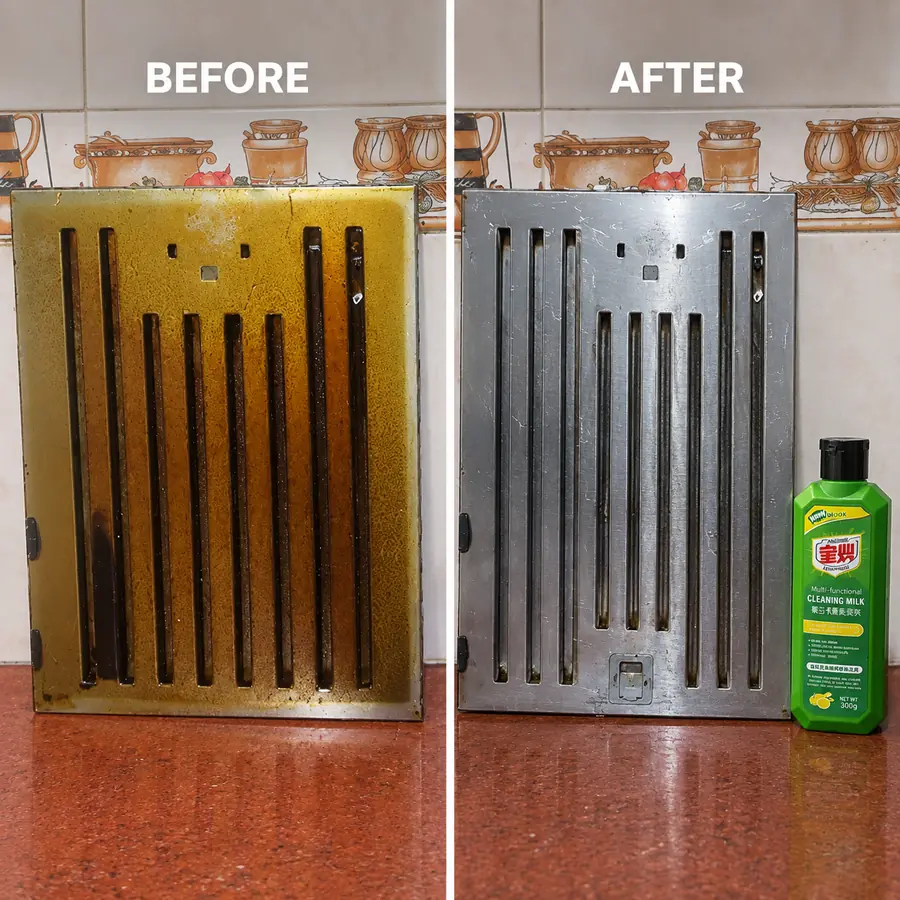
Methods people try — and why they fail
- Dishwash liquid and hot water — fine for a fresh film, useless once the grease has hardened.
- Caustic soda — it works, but it is dangerous. It burns skin, damages aluminium filters and the fumes are harmful in a closed kitchen.
- Baking soda paste — gentle, but you will be scrubbing for 30 minutes and it leaves white residue in the filter gaps.
- Paid chimney servicing — ₹500–₹1,500 every few months, and the hood is usually greasy again in weeks.
Step-by-step: cleaning the chimney at home
Step 1 — Switch off and let it cool
Turn off the chimney and the stove. If you cooked recently, wait 15 minutes.
Step 2 — Spray the hood and the wall
Spray make2shine® on the underside of the hood, the control panel area and the greasy wall tiles behind the stove. Wait 1–2 minutes. You will see the oil film start to loosen and go dull.
Step 3 — Wipe
Wipe with a dry or slightly damp microfiber cloth. The grease comes off onto the cloth. For stubborn corners, spray again and wait another minute instead of scrubbing harder.
Step 4 — Filters
Remove the baffle filters and place them in the sink. Spray both sides generously, wait 3 minutes, then rinse with warm water. The oil runs off. For very old filters, repeat once. Dry before fitting back.
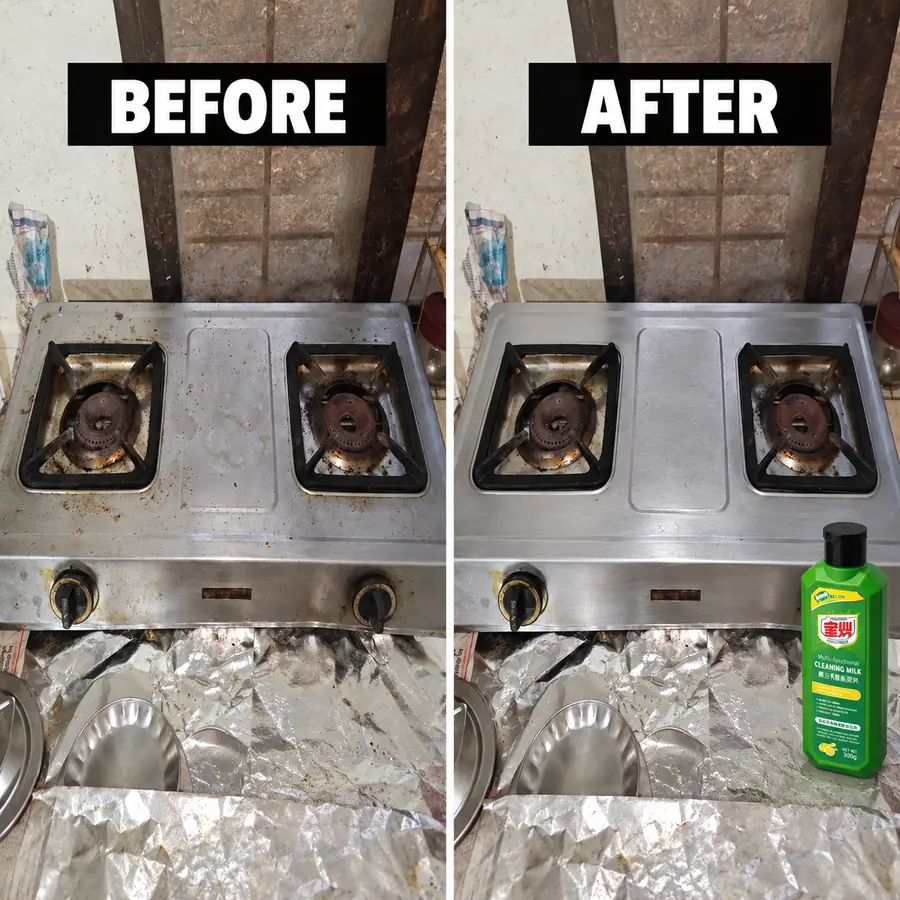
How often should you do this?
- Hood and wall: once a week, 2 minutes. Fresh grease comes off in a single wipe.
- Filters: every 15 days for heavy cooking homes, monthly for light cooking.
- Full deep clean: once a month if you fry regularly.
Doing it weekly means you never face the thick, hardened layer again.
One bottle, whole kitchen
The same make2shine® bottle you use on the chimney also cleans the gas stove, the slab, the sink, the microwave exterior, cabinet handles and the fridge door. That is why Indian homes keep one near the stove instead of five different products.
Frequently asked questions
Will it damage the stainless steel finish on the chimney? No. It is safe on stainless steel, glass hoods, painted metal and tiles. Wipe along the grain of the steel for a streak-free finish.
Can I use it on the auto-clean chimney too? Yes, on the outer hood, panel and filters. Do not spray inside the motor housing or on electrical parts.
How is this different from a degreaser spray from the hardware shop? Most degreasers are alkaline and harsh, with a strong smell. make2shine® is low-odour, non-toxic and safe to use without gloves — important when you are cleaning right above the food area.

More guides

Car Interior Cleaning at Home — Dashboard, Seats, Door Panels and Steering Wheel
Sticky dashboard, dusty AC vents, greasy steering wheel and stained door panels? A step-by-step home guide to cleaning your car interior with one spray, without the shiny, oily finish that cheap dashboard polishes leave behind.
Read guide →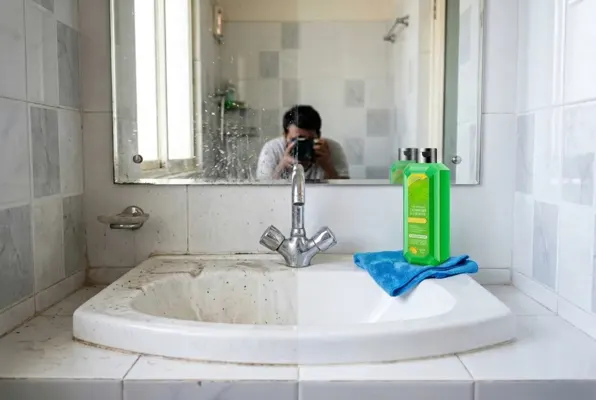
How to Clean Bathroom Tiles, Washbasin and Taps — A 10-Minute Weekly Routine
Soap scum on tiles, a dull washbasin, cloudy taps and black grout — here is a practical weekly bathroom cleaning routine for Indian homes that takes 10 minutes and does not need acid or scrubbing.
Read guide →
Japanese Cleaning Products in India — What Makes a Japanese Cleaner Different?
Japanese cleaning sprays have become popular in India for a reason. We explain what is different about the Japanese approach to home cleaning, how to spot an original product, and what to expect from a Japanese multi-cleaner.
Read guide →