How to Remove Yellow Stains from Toilet Seat, Commode and Bathroom Floor
Yellow stains on the toilet seat, around the commode base and on the bathroom floor are not just dirt. Learn what causes them, which cleaner works on each spot, and a weekly routine that keeps the bathroom white.
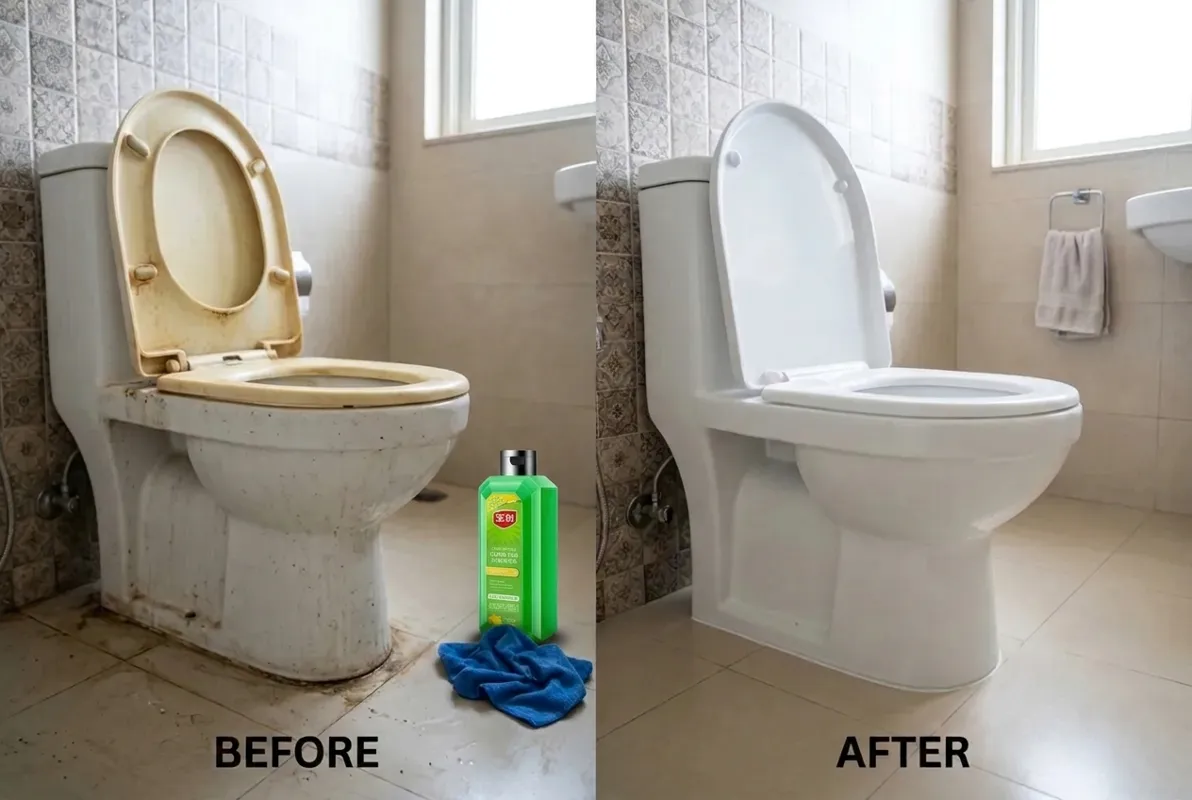
Where the yellow comes from
Different yellow stains have different causes, and that is why one product does not fix everything:
- Inside the bowl, under the rim — mineral scale plus bacteria. Needs a toilet bowl cleaner.
- Toilet seat and lid (plastic) — urine splashes and hard water dry into the plastic's micro-scratches. Bleach makes this worse over time by yellowing the plastic itself.
- Commode base and the floor joint — standing water and cleaning liquid run-off dry here daily.
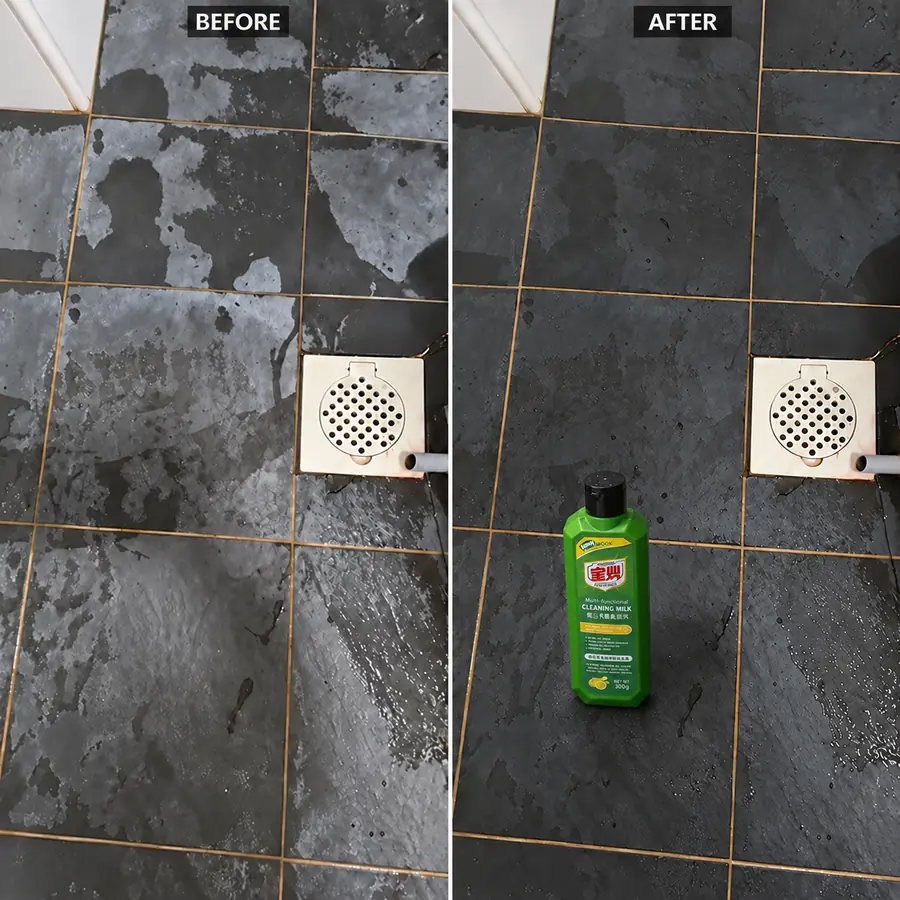
- Bathroom floor tiles and grout — hard water, soap scum and mop water that was never rinsed.
- Flush tank and the pipe — condensation drips carry minerals down the surface.
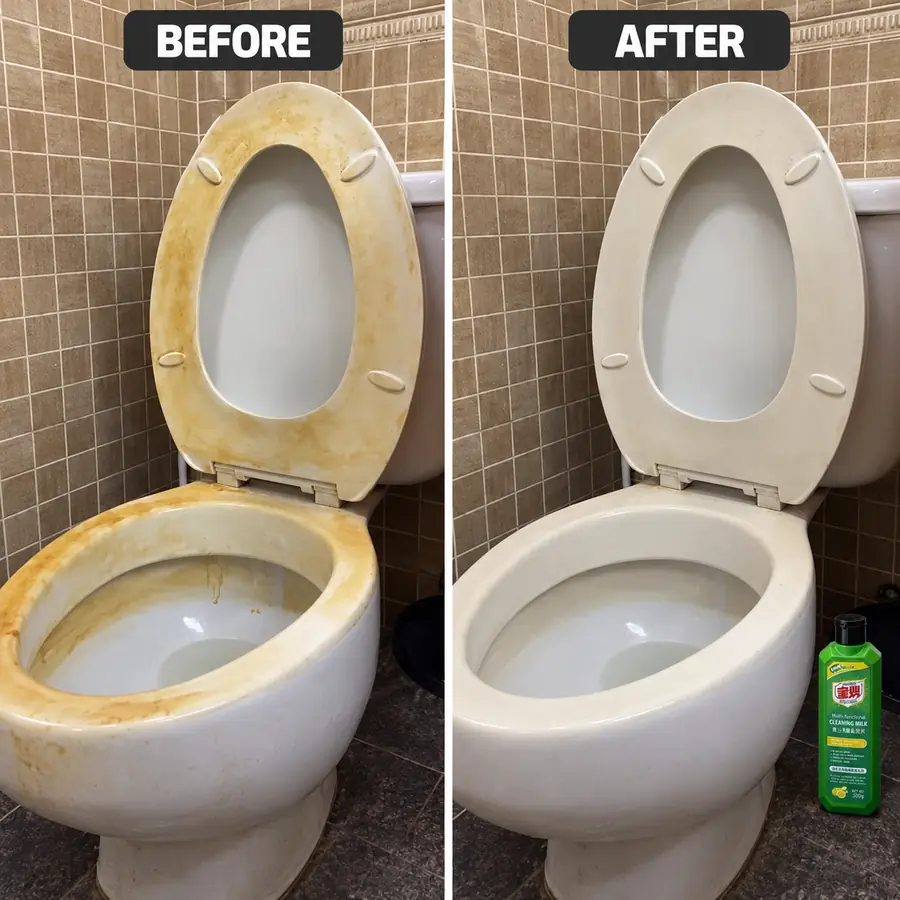
Why bleach and acid make the problem worse
Acid toilet cleaners are made for the ceramic bowl. On the plastic seat, on chrome fittings and on tile grout they:
- Permanently yellow and roughen the plastic seat
- Strip the chrome from the flush button and health faucet
- Eat the grout between tiles, leaving gaps where dirt collects
- Fill the bathroom with fumes
So use the acid cleaner inside the bowl, and a non-acid cleaner for everything else.
Step-by-step: whitening the seat, commode and floor
1. Seat, lid and hinges
Spray make2shine® on the top and underside of the seat and lid. Wait 1 minute. Wipe with a microfiber cloth. Around the hinges, spray and wipe with an old toothbrush — this is where the darkest line forms.
2. Commode outer body and base
Spray the outer ceramic and especially the base where it meets the floor. Wait 2 minutes, then wipe. The brown-yellow ring at the base usually comes off in one go.
3. Flush tank and pipe
Spray, wait, wipe. The chrome flush button and the health faucet shine up without any polish.
4. Floor tiles and grout
Spray the stained tiles and the grout lines, wait 2 minutes, then wipe or mop with a damp cloth. For old grout stains, spray again and use a soft brush along the line.
The 3-minute weekly routine that keeps it white
- Daily: nothing extra — just keep the floor dry after a bath.
- Twice a week: spray the seat, lid and base, wipe. 1 minute.
- Weekly: toilet bowl cleaner inside the bowl, make2shine® on the floor around the commode and the washbasin. 3 minutes total.
Once the old build-up is gone, stains never get the chance to set.
Frequently asked questions
Can I use it inside the toilet bowl? It will help with the outer rim and the seat area, but for scale under the rim and in the water line, a toilet bowl cleaner is the right product. Use both.
Is it safe for the plastic toilet seat? Yes — unlike bleach or acid, it does not yellow or roughen plastic.
Will it remove the smell too? It removes the urine salts and residue that cause the smell. Combined with a dry floor, the bathroom stays fresh.

More guides
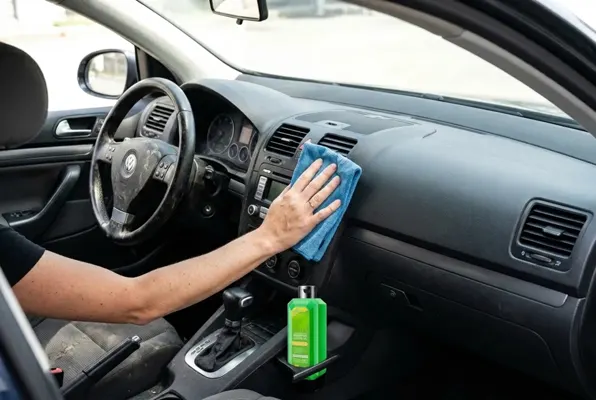
Car Interior Cleaning at Home — Dashboard, Seats, Door Panels and Steering Wheel
Sticky dashboard, dusty AC vents, greasy steering wheel and stained door panels? A step-by-step home guide to cleaning your car interior with one spray, without the shiny, oily finish that cheap dashboard polishes leave behind.
Read guide →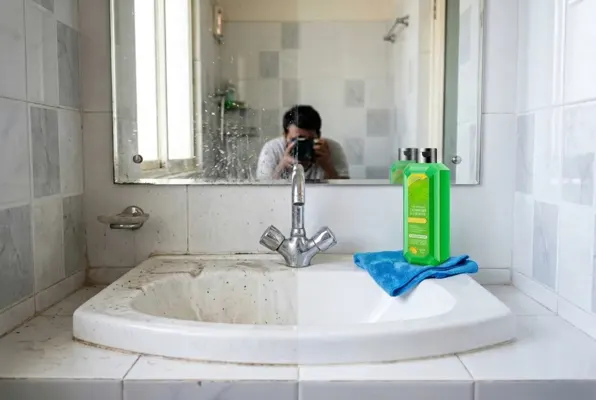
How to Clean Bathroom Tiles, Washbasin and Taps — A 10-Minute Weekly Routine
Soap scum on tiles, a dull washbasin, cloudy taps and black grout — here is a practical weekly bathroom cleaning routine for Indian homes that takes 10 minutes and does not need acid or scrubbing.
Read guide →
Japanese Cleaning Products in India — What Makes a Japanese Cleaner Different?
Japanese cleaning sprays have become popular in India for a reason. We explain what is different about the Japanese approach to home cleaning, how to spot an original product, and what to expect from a Japanese multi-cleaner.
Read guide →